Why Every Business in Kashmir Needs a Website in 2026
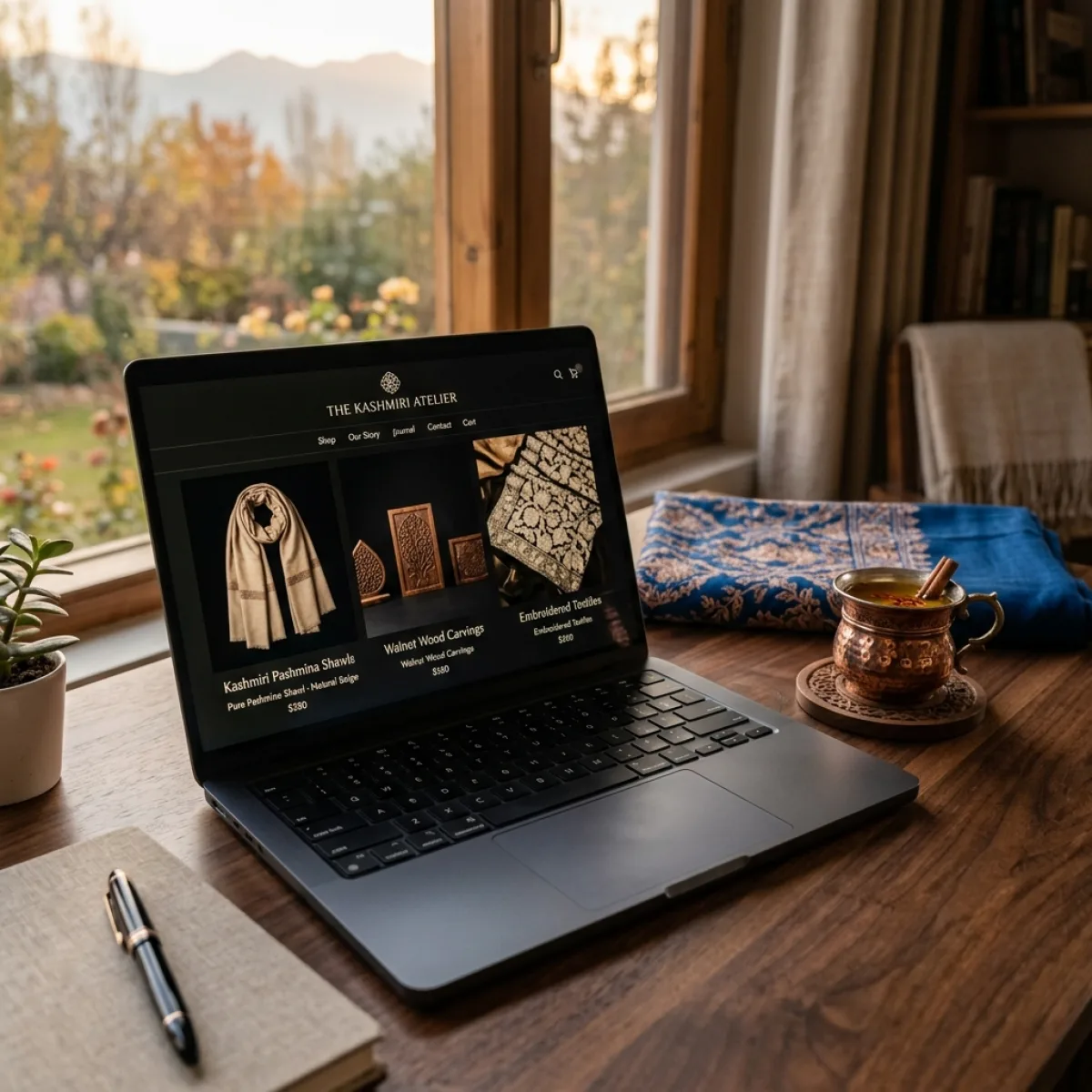
Quick summary: a website gives Kashmir businesses a searchable, owned digital presence that works alongside Google Business Profile, WhatsApp, and social media. The strongest local brands use it as the base for trust, leads, and long-term growth.
Let me start with a story that I hear variations of almost every week.
A business owner in Kashmir — let's call him Ahmed — runs a successful dry fruit shop in Lal Chowk, Srinagar. His family has been in the business for two generations. He has loyal local customers. Sales are okay. Not great, not terrible. But he has noticed something: the shop down the street — the one that opened just two years ago— seems busier. They are shipping orders all over India. They have a delivery boy who comes and goes all day with parcaged boxes. What are they doing differently?
The answer is surprisingly simple: they have a website and Ahmed does not.
That competitor's website shows up when someone in Mumbai searches "buy Kashmiri walnuts online." It shows up when someone in Bangalore searches "organic Kashmiri saffron." It shows up when a tourist who visited Kashmir last summer wants to order more of those amazing almonds they tried at their hotel. Every day, that website is pulling in customers from across India while Ahmed is limited to whoever walks past his shop in Lal Chowk.
📊 Kashmir Case Study: Lal Chowk Dry Fruit Store
The Challenge: A family-owned dry fruit store near Residency Road, Srinagar was reliant entirely on tourist footfall and seasonal physical visitors. During harsh winter months, sales dropped by nearly 70%.
The Solution: In 2025, they launched a streamlined e-commerce website with instant UPI payment gateway integration, WhatsApp direct ordering, and targeted SEO for terms like "buy authentic Kashmiri saffron online" and "pure walnut kernels Srinagar".
The Result: Within 5 months, the store achieved ₹3.8+ Lakhs in monthly online orders shipped directly to customers across Delhi, Bengaluru, and Mumbai—turning their traditional winter slump into their highest-grossing quarter.
This article is for every Ahmed in Kashmir. Every hotel owner, doctor, shopkeeper, teacher, tour operator, and service provider who knows they probably need a website but has not made the leap yet. I am going to lay out exactly why 2026 is the year to stop putting it off.
The Numbers That Should Convince You
Let's start with the data because numbers do not lie:
- Internet users in J&K: Over 8 million active internet users as of 2026, growing every year.
- Smartphone penetration: 65%+ of the population owns a smartphone. In urban areas like Srinagar and Jammu, it is closer to 80%.
- Google searches with local intent: 46% of all Google searches are looking for local information.
- "Near me" searches: Have grown by 150% in the last three years across India.
- Consumer research behavior: 81% of consumers research a business online before making a purchase or visiting in person.
- Trust factor: 75% of consumers judge a business's credibility based on their website design.
What do these numbers tell us? Your customers — whether they are locals in Srinagar or tourists planning a Kashmir trip from Delhi — are searching for businesses like yours on Google right now. If you do not have a website, you are invisible to them.
Reason 1: Your Competitors Already Have Websites
This might be the most compelling reason: the competition is not waiting. Walk through any market in Srinagar and count the businesses that have websites, Google Business Profiles, and social media presence. Five years ago, almost none of them did. Today, the number is growing every month.
When a customer searches for "best houseboat in Srinagar," Google shows the businesses that have websites with proper SEO. If your houseboat does not appear in those results, that booking goes to the houseboat down the lake that does appear. You did not make a mistake. You did not offend anyone. You just were not there when the customer was looking.
Every day without a website is a day you are giving your competitors free customers. Customers who might prefer your service, your quality, your hospitality — if only they could find you.
Reason 2: A Website Works 24/7 Without a Salary
Your shop closes at 7 PM. Your website never closes. At midnight, when a tourist in Mumbai is planning their Kashmir vacation and browsing hotels, your website is there showing your rooms, your rates, and your contact number. At 3 AM, when a buyer in London searches for "authentic Kashmiri pashmina" your e-commerce store is processing their order while you sleep.
A website is the only employee that works 24 hours a day, 365 days a year, never calls in sick, never takes a vacation, and never asks for a raise. The cost? A one-time investment of ₹15,000 to ₹75,000 depending on what you need. That is less than one month's salary for a shop assistant, and the website will work for you for years.
Reason 3: Digital Discoverability Is Now the Default
Think about your own behavior as a consumer. When was the last time you opened the Yellow Pages to find a phone number? When was the last time you asked a neighbor for a doctor recommendation without also Googling the doctor's name to check reviews? When was the last time you booked a hotel without looking at photos online first?
The default way people discover businesses in 2026 is through their phones. They search on Google. They check Google Maps. They look at reviews. They browse websites. They check Instagram. If your business is not present in any of these channels, you do not exist for a growing portion of your potential customer base.
This is not a generational thing anymore. It is not just "young people" searching online. Grandparents use WhatsApp. Parents book doctor appointments through Google. Business owners compare suppliers' websites before placing orders. The shift to digital discovery is universal.
Reason 4: Reduce Dependence on Middlemen
Kashmir's economy has a middleman problem. Pashmina artisans sell through wholesalers who double the price. Hotels pay 15-25% commission to OTA platforms like MakeMyTrip and Booking.com. Tour operators share revenue with travel portals. Dry fruit sellers go through supply chain that adds margins at every level.
A website with good SEO creates a direct channel between you and your customers. When a tourist finds your hotel directly on Google and books through your website, you keep 100% of the booking revenue. When a customer in Bangalore buys saffron from your online store, there is no middleman taking a cut.
Let's do the math. A hotel paying ₹50,000 per month in OTA commissions would recover the cost of a ₹75,000 website in less than two months if even half those bookings came through their own website instead. For most businesses, a website is not a cost — it is a tool for eliminating costs you are already paying to middlemen.
Reason 5: Build Credibility and Trust
In 2026, the first thing most people do when they hear about a business they have not used before is Google it. They want to see if it is legitimate. They want to see photos of the work. They want to read what other customers have said. They want to get a sense of whether this is a professional operation or a fly-by-night outfit.
A professional website immediately establishes credibility. It tells potential customers that you take your business seriously enough to invest in a proper online presence. It shows your work, your team, your story, and your contact information in a clean, organized way. It makes people trust you before they have even met you.
Conversely, not having a website — or having a poorly designed one that looks like it was built in 2010 — actively hurts credibility. When a potential customer Googles your business and finds nothing, they wonder if you are even still open. When they find a website that breaks on their phone or takes 10 seconds to load, they wonder if your product or service is equally careless.
Reason 6: Tourism Is Digital-First Now
Kashmir's tourism industry is one of the biggest beneficiaries of digital marketing. Tourists planning a trip to Kashmir start their research weeks or months in advance — Googling things like "best time to visit Kashmir," "Gulmarg activities," "houseboat prices Dal Lake," and "Kashmir tour packages."
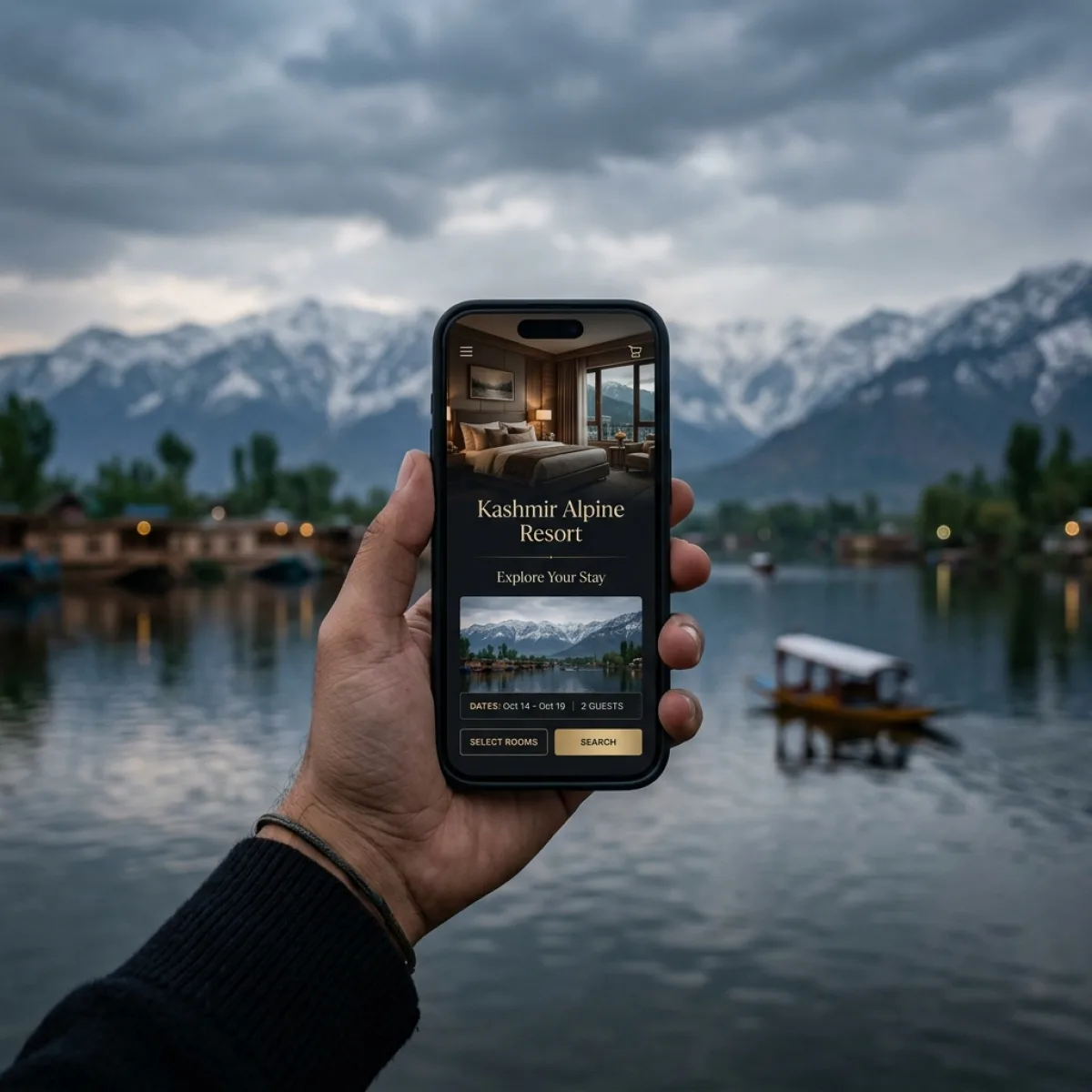
The businesses that show up in these searches capture the tourist before they even arrive. A houseboat with a beautiful website showing photos of the lake, room interiors, and honest reviews will get more bookings than a houseboat that relies only on guys standing at the jetty trying to catch tourists as they arrive.
Professional tour operators with websites ranking for "Kashmir tour packages" and "Pahalgam trek packages" are building their client lists months before the tourist season begins. By the time peak season arrives, their calendar is full while others are still waiting for walk-in customers.
Reason 7: It Is More Affordable Than You Think
Many business owners in Kashmir assume a website costs ₹1,00,000 or more because that is what some Delhi agencies quoted them. The reality is very different. A professional, custom-designed website from a local Kashmir web designer starts at ₹15,000. A full WordPress website with SEO and CMS starts at ₹35,000. Even an e-commerce store starts at ₹35,000-₹75,000.
Compare this to other business expenses: your monthly rent is probably more than the entire cost of a website. A single newspaper ad can cost ₹5,000-₹20,000 and reaches people for one day. A wedding hall banner costs ₹3,000-₹5,000 and reaches people walking past for one event. A website, in contrast, reaches people actively searching for your business every day for years.
Reason 8: Data and Insights About Your Customers
When a customer walks into your shop, you know nothing about them until you start talking. When a customer visits your website, you know where they came from (Google, social media, or direct), what pages they looked at, how long they stayed, what device they used, and which page they were on when they decided to contact you or leave.
This data is incredibly valuable. It tells you which services are most popular. It tells you which marketing channels are working. It tells you what questions customers have (based on which pages they visit). It tells you where you are losing potential customers (based on where they drop off). This is business intelligence that physical stores simply cannot provide.
The Excuses — And Why They Don't Hold Up
"I don't need a website, I have a Facebook page." Facebook reach has dropped to 2-5% of your followers. You do not control Facebook. They can change the rules anytime. And Facebook does not show up in Google search results the way a website does.
"My customers are not online." In 2026, with 8 million internet users in J&K, this is almost certainly wrong. Even if your current customers found you offline, your future customers are searching online right now.
"I don't know how to maintain a website." You do not need to. Professional web designers include maintenance support. WordPress lets you update basic content as easily as posting on WhatsApp. And managed maintenance plans start at just ₹3,000/month.
"It's too expensive." A website starts at ₹15,000 — less than your monthly electric bill for most businesses. And unlike an electric bill, a website is an investment that generates customers and revenue.
How to Get Started
If you have read this far and you are convinced (or at least curious), here is what to do next:
- Define what you need. A simple 5-page site? A blog? An online store? Knowing this helps any web designer give you an accurate quote.
- Set a budget. Even a rough range like "under ₹30,000" or "₹30,000-₹50,000" helps narrow options.
- Talk to 2-3 web design companies. Compare their proposals, check their portfolios, and go with the one that feels right.
- Gather your content. Photos, text about your services, contact details, team information. The more prepared you are, the faster the project moves.
- Launch and promote. Getting the website built is step one. Promoting it through Google Business Profile, social media, and SEO is step two.
If you want to start the conversation, reach out to Web Design Kashmir for a free consultation. We will give you honest advice about what you need, whether that means working with us or someone else. The important thing is that you get online in 2026.
Because in 2026, the question is no longer "Should my business have a website?" The question is "How much longer can my business survive without one?"